Understanding Fort Wayne's Glacial Clay Problem
If you live in Fort Wayne, you've probably noticed a familiar pattern each spring: your driveway develops new cracks, bumps, and potholes seemingly overnight. This isn't a coincidence, and it's not a sign that your asphalt is simply old or poorly installed. The real culprit lies beneath the surface, in the glacial clay soil that underlies much of northeastern Indiana.
During the last ice age, glaciers carved their way across this region, leaving behind dense deposits of clay and silt. This glacial clay has a unique property that makes it particularly problematic for driveways: it absorbs and retains moisture exceptionally well. When winter temperatures drop below freezing, the water trapped in this clay expands, pushing upward with tremendous force. This process, known as frost heave, can lift your driveway by several inches over the course of a winter season. When spring arrives and the ground thaws, the soil settles unevenly, leaving behind the cracked, buckled, and potholed surface you see in March and April.
How Frost Heave Damages Your Asphalt Driveway
Frost heave damage doesn't happen all at once. Instead, it's a gradual process that worsens with each freeze-thaw cycle. When water in the soil freezes, it expands with enormous pressure. This expansion forces the ground upward, and since your asphalt driveway sits on top of that soil, it rises too. The problem intensifies when ice lenses form within the clay, creating layers of frozen water that grow larger as more moisture is drawn upward from deeper soil layers.
As the ground thaws in spring, it doesn't settle evenly. Some areas sink faster than others, creating the uneven surface that leads to cracks, breaks, and those frustrating potholes that seem to appear overnight. These aren't just cosmetic problems. Once cracks form in asphalt, water seeps into them, reaching the soil base below. This moisture accelerates the frost heave cycle the following winter, making the damage progressively worse each year. Without intervention, a small crack can become a major structural failure within just a few seasons.
The damage pattern in Fort Wayne is so predictable that many homeowners and property managers plan their maintenance budgets around spring repairs. The question isn't whether frost heave will damage your driveway, but how severe that damage will be and when you should address it.
Spotting Spring Damage: Signs Your Driveway Needs Attention
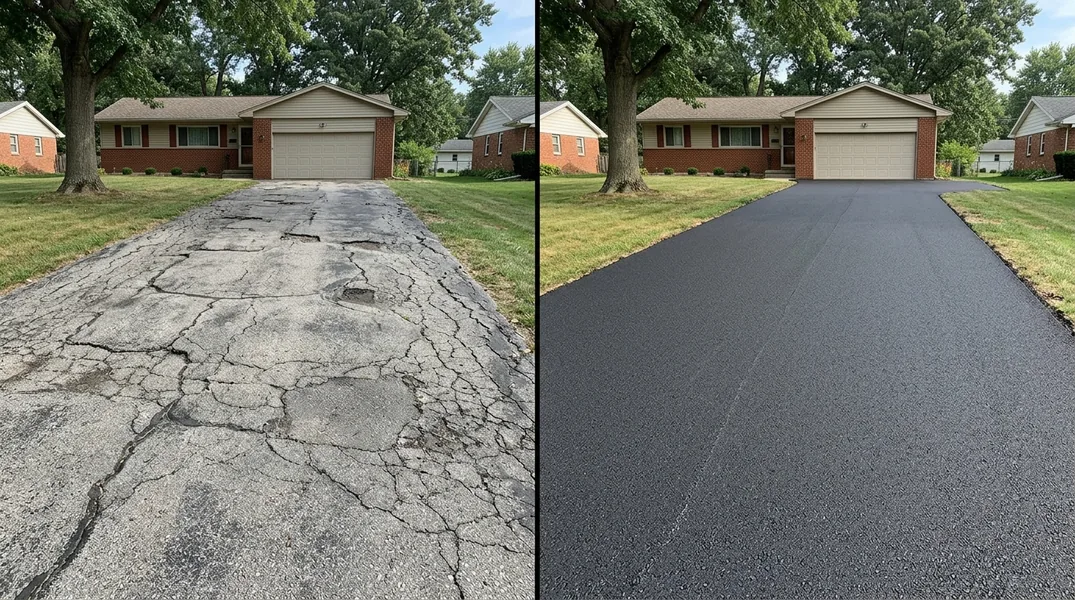
Learning to recognize frost heave damage early can save you money and prevent safety hazards. The most obvious sign is the appearance of new potholes or enlarged existing ones. These holes often seem to appear suddenly, but they're actually the result of months of freeze-thaw cycles finally breaking the surface. Another common indicator is a wavy or buckled appearance in sections of the driveway, particularly where drainage is poor or where water naturally collects.
Alligator cracking, a pattern of interconnected cracks that resembles the skin of an alligator, is another telltale sign of frost heave damage. This pattern develops because the uneven ground movement stresses the asphalt in multiple directions simultaneously. You might also notice that one side of your driveway sits noticeably higher than the other, or that your garage apron has separated from the main driveway surface. These vertical displacement issues are classic frost heave symptoms and indicate that the underlying soil movement is significant.
If you're seeing any of these signs in spring, it's time to consider Driveway Repair options. The longer you wait, the more extensive and expensive the repairs become. Small problems caught early can often be fixed with targeted Pothole Repair & Asphalt Patching, while larger issues may require more comprehensive solutions.
Repair or Replace: Deciding Your Best Option
When frost heave damage appears on your driveway, you face a critical decision: should you repair the damaged sections, or is it time to replace the entire driveway? This choice depends on several factors, including the extent of the damage, the age of your driveway, and your long-term goals for the property.
If the damage is limited to a few isolated potholes or small cracked areas, Pothole Repair & Asphalt Patching can be a cost-effective solution. Professional patching involves cleaning out the damaged area, preparing the base, and filling it with fresh asphalt that's properly compacted. When done correctly, a quality patch can last several years, especially if the underlying soil conditions stabilize. However, if your driveway shows widespread cracking, multiple potholes in different areas, or significant buckling, patching becomes a temporary fix rather than a lasting solution.
For driveways that have suffered extensive frost heave damage, Asphalt Resurfacing & Overlay offers a middle ground between repair and full replacement. This process involves applying a new layer of asphalt over the existing surface, which can extend the life of your driveway by 10 to 15 years. However, resurfacing only works if the underlying base is still structurally sound. If the base has been severely compromised by repeated frost heave cycles, full replacement with improved drainage and base preparation becomes the better long-term investment.
The best way to understand your specific situation is to have a professional evaluate your driveway. Fort Wayne Asphalt Paving can assess the damage and recommend the most cost-effective solution for your property. Contact us at (260) 264-9248 or request a free estimate to learn what makes sense for your driveway.
Preventing Future Frost Heave Damage
While you can't eliminate frost heave entirely in a region with glacial clay soil, you can significantly reduce its impact through proper installation and maintenance. The key is managing water. The more moisture that accumulates in the soil beneath your driveway, the more severe the frost heave will be. During Asphalt Driveway Paving & Installation, professional contractors should install proper drainage systems, including a compacted gravel or crushed stone base layer that allows water to move away from the driveway rather than pooling beneath it.
Maintaining your driveway also plays a crucial role in preventing frost heave damage from worsening. Seal coating your asphalt every two to three years creates a protective barrier that prevents water from seeping into cracks. If small cracks do appear, addressing them immediately with patching prevents water from reaching the soil base below. Keeping your driveway clean and ensuring that water drains away from the surface, rather than collecting in low spots, also helps reduce the moisture that feeds the frost heave cycle.
Proper grading is another important factor. Your driveway should slope slightly away from your home and garage, allowing water to drain naturally. If standing water collects on your driveway after rain or snow melt, that's a sign that grading needs adjustment. These preventive measures won't eliminate spring damage entirely, but they can reduce it significantly and extend the life of your driveway by years.
Getting Professional Help for Your Frost Heave Repairs
Dealing with frost heave damage requires expertise specific to the challenges of glacial clay regions. A contractor unfamiliar with these conditions might install a repair that fails within a year or recommend an inappropriate solution that doesn't address the underlying problem. Fort Wayne Asphalt Paving understands the unique challenges that northeastern Indiana homeowners face and has the experience to recommend solutions that actually work in this environment.
Whether you need emergency Pothole Repair & Asphalt Patching to address spring damage or you're planning a complete driveway replacement, professional installation makes all the difference. Our team can evaluate your specific situation, explain your options, and provide realistic expectations about how long repairs will last before the next frost heave cycle arrives. We'll also discuss long-term solutions that reduce future damage.
Don't wait until frost heave damage becomes severe. The earlier you address these issues, the more affordable your solution will be. Call Fort Wayne Asphalt Paving at (260) 264-9248 today to schedule a free estimate and learn exactly what your driveway needs to withstand the next freeze-thaw season.
Looking for a professional asphalt paving contractor in Fort Wayne? Fort Wayne Asphalt Paving responds fast for all your asphalt paving needs.
Get a Free Quote